

Most hotel guests never think twice about the card that opens their room. Hotels do, though choosing the right type, keeping enough in stock, and encoding each one correctly matters every single day. Blank hotel key cards are unprinted cards that staff encode on demand for guests, employees, or specific facilities.
Despite the name, many already hold a magnetic stripe, RFID chip, or antenna inside. They cover guest room access, replacement keys, staff credentials, backup supply, amenity entry, and flexible day-to-day operations. Getting the right type and technology starts with knowing what they are actually used for.
1. Guest Room Access
Encoding a blank card with a guest’s assigned room and validity period is the most common use across hotel operations. Both magnetic stripe and RFID cards can be programmed to expire at checkout or another approved time, and both can be issued quickly during standard check-in, late arrivals, or room changes.
Magnetic Stripe vs RFID for Room Access
Magnetic stripe cards work with swipe-style hotel locks. RFID cards use contactless communication to tap or hold near the reader. Properties benefit from keeping blank stock on hand because encoding happens at check-in for any room, bypassing pre-assigned inventory that may not match current availability.
2. For Lost or Damaged Keys
When a guest loses a card or a card stops working, blank stock lets front desk staff issue a replacement immediately. The previous credential can be cancelled or deactivated when the system supports it, and a new card is encoded without delay.
Key replacement outcomes from using blank stock include the following:
- No waiting for preprinted inventory to arrive
- Guest security maintained through a new, unique credential
- Old cards deactivated rather than reused where the system allows
- Room changes handled without reprinting a full card set
3. Backup Cards During Busy Periods
Properties that run at high occupancy benefit from keeping blank cards available as flexible backup. Fully booked weekends, holidays, conferences, large group arrivals, last-minute reservations, and extended stays all create demand spikes that preprinted inventory cannot always cover.
Quicker response during unexpected occupancy changes becomes possible with blank stock on hand. Keys are created on demand rather than stored in pre-assigned batches, which reduces front desk shortages and gives the operations team more flexibility when bookings shift.
4. Staff and Employee Access
Staff credentials are one of the most practical applications of blank hotel key cards. Housekeeping, maintenance, managers, front desk employees, security personnel, and contractors each need access to specific areas without full master access to every room.
Each credential can be programmed with role-appropriate permissions using blank cards:
- Housekeeping assigned to specific floors or room blocks
- Maintenance given access to utility zones and service corridors
- Security holding broader credentials linked to emergency protocols
- Contractors issued time-limited cards that expire when work ends
Temporary workers can be given cards with schedule-based or date-limited access, and those credentials deactivated without affecting any other staff cards. Where the system supports it, trackable electronic credentials replace physical master keys.
5. Access to Hotel Amenities
RFID and compatible smart cards support access beyond the guest room. Gyms, pools, spas, saunas, fitness centers, lockers, business centers, restricted elevator floors, and parking areas can all be connected to a single card credential where the hotel’s lock and access control system allows it.
Linking Access to the Guest’s Booking
Amenity access can be linked to a guest’s booking, membership, room type, or package, allowing different permission levels for guests, members, staff, and visitors. When the hotel’s access control system supports it, one RFID card can provide access to the guest room along with approved amenities such as gyms, pools, elevators, or parking areas. The available functions depend on the property’s installed hardware, software, and card technology.
6. Temporary Access for Contractors and Visitors
Building contractors, event staff, delivery teams, temporary employees, tour groups, vendors, and conference attendees sometimes need controlled access to specific parts of a property. Blank cards let the hotel issue time-limited credentials that restrict entry to approved areas and times. When work or an event ends, those cards are deactivated. The property maintains a record of issued temporary credentials without providing unrestricted master access when limited access is sufficient.
7. Room Changes and Extended Stays
Room changes and extended stays both require updated credentials. Blank stock supports this by letting front desk staff reprogram a card when a guest moves to another room, extend access when the reservation is extended, and create new credentials after a room upgrade or booking adjustment.
Old room credentials or expired cards can be deactivated to prevent unauthorized access after the change. Properties handling frequent upgrades or room moves benefit from having blank cards ready at the desk rather than waiting for pre-encoded inventory.
8. Emergency and Operational Access
Authorized emergency cards can be prepared for fire, water, or security situations, maintenance incidents, evacuations, and utility failures. Emergency credentials are kept controlled and documented alongside the property’s broader emergency procedures. Operations teams can prepare these cards in advance and update them as staffing and procedures change, without the cards being tied to any particular guest or reservation.
9. Contactless Guest Experience
RFID cards support tap-based room entry, removing the need for physical swiping or inserting a card. Guests carrying luggage or personal items benefit from faster access at doors, elevators, amenity areas, and parking gates.
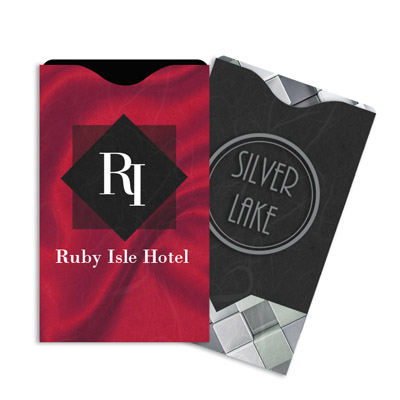
Pairing a blank RFID card with a branded sleeve or welcome packet maintains a professional presentation even when the card itself carries no printed branding. Clear setup instructions in the sleeve reduce guest confusion at the door.
10. Security and Access Control
Security depends entirely on the encoding system, permissions, lock hardware, and hotel procedures being properly managed. Best practices for using blank key cards securely include encoding only the information required for access, using unique credentials for individual guests and staff members, setting activation and expiration times, deactivating lost or expired cards, and restricting staff access by role.
Logs, Storage, and System Configuration
Maintaining logs when the access control system supports auditing provides a record of credential use. Storing blank card stock securely prevents unauthorized encoding. Modern key card systems verify whether a credential is authorized for a particular room or zone during a defined period, but that verification depends on the system being configured correctly.
Types of Blank Hotel Key Cards
Different properties use different card technologies depending on their lock systems, budget, and guest experience goals. Here is how the three main types compare.
| Card Type | How It Works | Common Uses | Key Limitation |
| Magnetic Stripe | Stores data on a physical stripe read by a swipe lock | Guest rooms, backup keys, staff cards, replacements | Stripe wears with repeated use; requires physical contact |
| RFID | Uses an embedded chip and antenna for contactless tap access | Rooms, elevators, gyms, pools, parking, lockers | Must match the lock system’s chip type and frequency |
| NFC / Smart | Communicates wirelessly at short range; compatible with some mobile credential systems | Contactless entry, smart hotel ecosystems, digital access platforms | RFID, NFC, and proximity cards are distinct and not interchangeable |
Before ordering any type, confirm the card is compatible with the hotel’s encoder and door lock system. Magnetic stripe cards may require LoCo or HiCo specification. RFID cards require the correct chip type, frequency, and encoding method. Cards built for one platform work only with compatible hardware.
Choosing the Right Blank Hotel Key Card
Selecting the correct blank card requires matching the card’s technology to the hotel’s installed hardware.
Match the Card to the Lock System
Magnetic stripe locks require compatible stripe cards in the correct coercivity. RFID locks require cards with the matching chip type and frequency. NFC or proprietary systems have their own compatibility requirements.
What to Check Before Placing an Order
- Encoder compatibility with the card’s stripe or chip type
- Card thickness and CR80 standard size
- Whether the card must support amenity, elevator, or parking access
- Staff, guest, replacement, and backup volume requirements
- Durability needs and supply availability
- Whether blank, preprinted, or printable stock is the right starting point
Testing a sample before committing to a large order is strongly recommended.
Do blank hotel key cards work right out of the box?
No, each card must first be encoded by the hotel’s system. Until programmed with room access and valid dates, the card opens nothing and carries no active permissions at all.
What is the difference between a blank key card and a preprinted hotel key card?
Preprinted cards arrive with branding or fixed information already on them. Blank cards arrive with nothing printed, so staff can encode them for any guest or purpose at check-in.
Can one blank hotel key card cover room access and hotel amenities?
Yes, when the hotel’s system supports it. RFID cards can carry multiple permissions across rooms, gyms, elevators, and parking areas. Assigned permissions depend on the property’s hardware and encoder settings.
Conclusion
Hotel operations rely on blank key cards for a wide range of purposes, from standard guest check-in through emergency access management. Magnetic stripe and RFID options each suit different lock systems and use cases, and selecting the right type requires confirming technology compatibility before ordering.
Plastilam supplies blank hotel key cards in magnetic stripe and RFID formats, compatible with most major hotel lock platforms. Cards are produced in the United States with consistent quality and are available in plain blank, printable, and custom printed formats to suit different hotel operations. Properties and businesses looking for reliable blank card stock, compatible with their encoder and lock system, can request samples or place orders at Plastilam.
Read More: Why Do Hotels and Restaurants Use Gift Card Presenters?
