
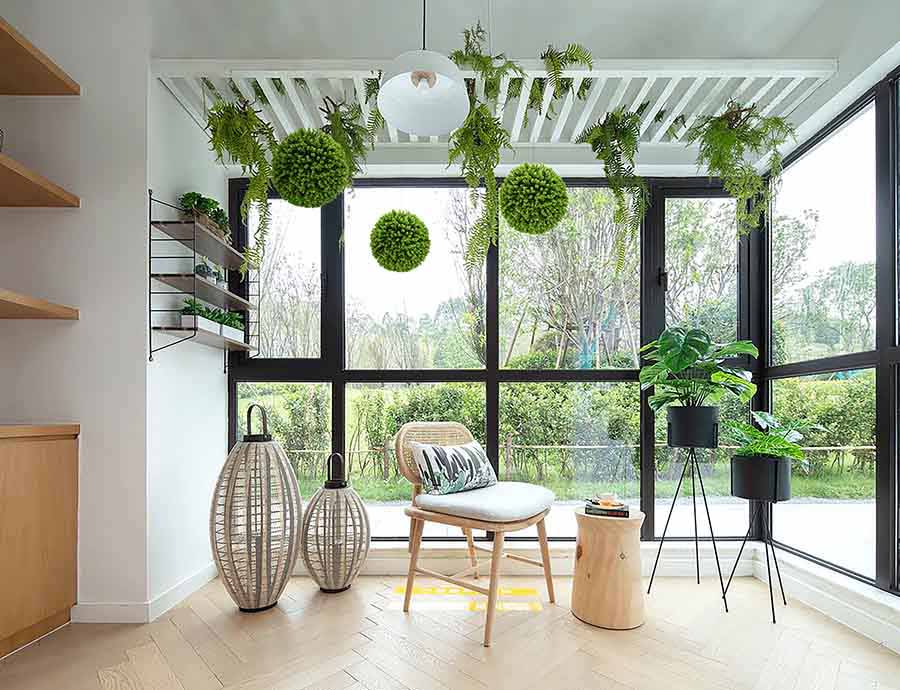
Greenery can make an interior feel warmer, softer, and more complete without requiring major changes to furniture or décor. For homeowners, decorators, and real estate professionals who want that visual effect without ongoing plant care, artificial greenery can be a practical choice. It can add natural-looking texture to rooms that lack sunlight, fill awkward spaces, and provide a consistent decorative element throughout the year.
Why Greenery Works So Well Indoors
Many interiors rely heavily on straight lines, solid surfaces, and neutral finishes. Tables, shelving, cabinetry, and upholstered furniture can make a room feel structured, but they may also leave the space looking flat.
Greenery introduces softer shapes and varied textures. Leaves, stems, branches, and trailing forms can break up hard lines and make a room feel more relaxed.
Another benefit is flexibility. Greenery can work in nearly any interior style, from modern and minimalist spaces to traditional and casual homes. It can also complement a wide range of color schemes because green acts as a natural accent rather than a competing decorative color.
Choose the Right Type for the Space
The size and form of the greenery should match the room and the surface where it will be displayed.
Tall floor plants can work well in living rooms, entryways, and empty corners. Smaller potted greenery is better suited to shelves, nightstands, desks, bathroom counters, and kitchen surfaces.
Trailing greenery can help soften open shelving or high cabinets, while fuller arrangements can add more visual weight to larger rooms.
Before selecting a piece, consider the surrounding furniture. A large sectional or oversized console may need taller greenery for balance, while a compact table usually looks better with a smaller arrangement.
Proportion is one of the most important factors in making greenery look intentional.
Use Empty Corners More Effectively
Corners are often among the hardest parts of a room to decorate.
Adding another piece of furniture can make the area feel crowded, especially in smaller homes. Greenery can fill the visual gap without taking over the space.
A tall plant beside a sofa can soften the transition between furniture and the wall. Greenery near a bookcase can break up rigid lines and add visual contrast. In a bedroom, a plant in an unused corner can introduce height without reducing storage or walking space.
This approach is especially useful in rooms with large areas of blank wall.
Add Greenery to Shelves and Surfaces
Smaller greenery works well when a room needs subtle decorative interest rather than a major focal point.
On shelves, plants can help separate books, framed photos, and decorative objects. On a console table, a small arrangement can provide height while leaving space for lamps or accessories.
Kitchen islands and dining tables can also benefit from greenery, especially when floral arrangements feel too formal or colorful.
In bathrooms, compact greenery can bring a softer look to stone, tile, glass, and metal surfaces.
The key is moderation. A few well-placed pieces usually create a more natural effect than filling every available surface.
Style Greenery According to the Room
Different rooms benefit from different approaches.
Living rooms can support larger plants or multiple smaller pieces, particularly when there is plenty of open space. Bedrooms often look better with simpler greenery that supports a calm atmosphere.
Home offices can benefit from plants placed near desks, shelving, or video-call backgrounds. Entryways can use taller greenery to create a welcoming first impression.
For dining spaces, keep arrangements low enough that they do not block conversation or sightlines across the table.
The container matters too. Ceramic pots can create a polished appearance, while woven baskets may suit more relaxed interiors. Neutral planters are often easier to combine with changing décor.
Use Artificial Greenery for Home Staging
Realtors and home stagers can use greenery to make properties feel more welcoming without adding highly personal décor.
A plant in an empty living room corner can make the space feel less bare. Small greenery on a bathroom counter can add color without distracting from the finishes. A plant near a kitchen island or dining area can help buyers imagine the home as a comfortable, lived-in space.
Artificial options are useful for properties that may stay staged for several weeks. There is no need to manage watering schedules, changing sunlight, or plant condition before showings.
The same pieces can also be moved between rooms for photography, open houses, and private tours.
Avoid Overdecorating
Too much greenery can make a room feel cluttered.
Rather than placing plants in every corner and on every table, identify areas that need added height, texture, or color. Use greenery where it solves a visual problem.
It is also helpful to vary sizes. A combination of one taller plant and a few smaller arrangements usually looks more natural than repeating the same size throughout the home.
Keep pieces clean as well. Dust can reduce realism over time, so occasional light cleaning helps preserve their appearance.
Bring More Texture Into Everyday Spaces
Artificial plants and greenery can add softness, dimension, and visual interest to interiors without requiring regular care. They can work in living rooms, bedrooms, kitchens, offices, entryways, and staged properties while remaining easy to rearrange as décor changes. For homeowners, decorators, retailers, and real estate professionals looking for greenery for a wide range of spaces, visit Fake Flowers to explore options for everyday styling and home staging.