
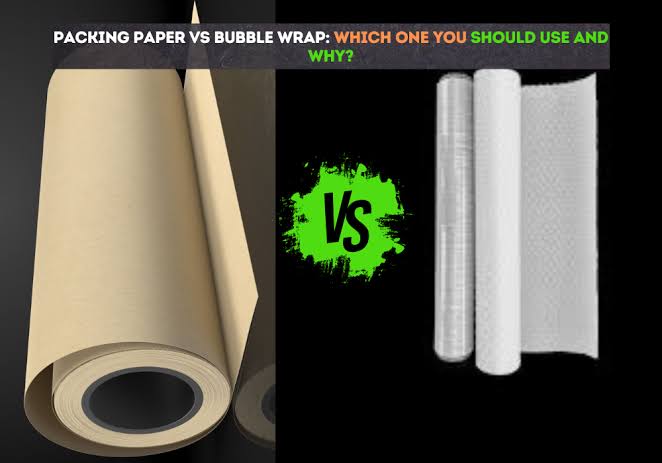
Bubble Roll vs. Packing Paper: Which Offers Better Protection?
When you’re preparing products for shipping or storage, choosing the right protective packaging can make all the difference. Whether you’re sending fragile glassware, electronics, collectibles, or everyday retail items, the material you use directly impacts product safety, shipping costs, and customer satisfaction. Bubble roll and packing paper are two of the most commonly used cushioning materials, but they serve different purposes. Understanding their strengths and limitations helps you select the best option for every package.
In this guide, we’ll compare bubble roll and packing paper based on protection, cost, sustainability, ease of use, and ideal applications so you can confidently choose the right packaging material for your business or personal shipping needs.
What Is Bubble Roll?
Bubble roll is a flexible plastic cushioning material made with rows of sealed air-filled bubbles. The trapped air acts as a shock absorber, protecting items from impacts, vibration, and rough handling during transit.
Available in various bubble sizes and roll widths, bubble roll can be wrapped around products of different shapes and sizes. It’s widely used by e-commerce businesses, warehouses, manufacturers, and moving companies because it provides reliable cushioning without adding significant weight.
Common Uses
- Glassware and ceramics
- Electronics
- Picture frames and artwork
- Home décor
- Medical equipment
- Collectibles
- Automotive parts
What Is Packing Paper?
Packing paper is a plain, unprinted paper used to wrap products and fill empty spaces inside shipping boxes. Unlike newspaper, packing paper won’t transfer ink onto delicate surfaces.
While it doesn’t provide the same cushioning as bubble roll, it offers excellent surface protection and helps prevent items from shifting during transportation.
Common Uses
- Wrapping dishes
- Protecting furniture surfaces
- Filling box voids
- Clothing and textiles
- Books
- Kitchenware
- General moving supplies
Bubble Roll vs. Packing Paper: Side-by-Side Comparison
| Feature | Bubble Roll | Packing Paper |
| Cushioning | Excellent | Moderate |
| Shock Absorption | Excellent | Limited |
| Surface Protection | Excellent | Good |
| Void Fill | Good | Excellent |
| Lightweight | Yes | Relatively heavier for equal protection |
| Moisture Resistance | Yes | No |
| Reusable | Yes | Sometimes |
| Recyclability | Depends on local recycling programs | Widely recyclable |
| Best For | Fragile items | Everyday packing and void filling |
Protection Against Impact
When comparing protective performance, bubble roll clearly offers superior impact resistance.
The air-filled bubbles compress when pressure is applied, absorbing shocks that would otherwise reach the packaged item. This makes bubble roll ideal for products that are fragile or expensive to replace.
Packing paper, on the other hand, provides only a thin protective layer. While crumpling paper creates some cushioning, it cannot absorb impacts nearly as effectively as air-filled bubbles.
Winner: Bubble Roll
Surface Protection
Both materials protect surfaces, but they do so differently.
Bubble roll prevents scratches while also cushioning against impacts. It’s especially useful for glossy finishes, glass, painted surfaces, and electronics.
Packing paper prevents dust, light scuffs, and minor scratches. However, if the package receives a hard impact, the paper alone won’t offer much protection.
Winner: Bubble Roll
Preventing Movement Inside the Box
One of packing paper’s greatest strengths is filling empty spaces.
Crumpled packing paper locks products into position, reducing movement during shipping. Even if bubble roll is used around the item, empty gaps should still be filled to prevent shifting.
Many businesses actually combine both materials for maximum protection.
Winner: Packing Paper
Weight and Shipping Costs
Bubble roll is extremely lightweight because most of its volume consists of trapped air.
Packing paper becomes heavier as more sheets are added to achieve similar cushioning. For high-volume shipments, this additional weight may increase shipping costs.
If you’re shipping products frequently, lightweight packaging can help reduce transportation expenses.
Winner: Bubble Roll
Moisture Resistance
Shipping conditions aren’t always predictable.
Bubble roll is made from plastic, making it resistant to moisture and humidity. This helps protect products if packages are exposed to damp environments during storage or transportation.
Packing paper absorbs moisture, which can weaken its protective qualities and potentially affect moisture-sensitive products.
Winner: Bubble Roll
Sustainability
Packing paper has an environmental advantage in many situations.
Most packing paper is recyclable, biodegradable, and made from renewable materials. It’s also widely accepted by municipal recycling programs.
Bubble roll is often reusable multiple times, helping reduce waste. Many modern bubble rolls also contain recycled content, although recycling options vary depending on local facilities.
Businesses looking to reduce environmental impact often reuse bubble roll several times before recycling it.
Winner: Packing Paper (for recyclability)
Ease of Use
Bubble roll is simple to wrap around products and can be secured quickly using packing tape.
Packing paper requires more preparation. It often needs to be folded, layered, or crumpled before use to provide adequate protection.
For high-volume packing operations, bubble roll generally improves packing efficiency.
Winner: Bubble Roll
Cost Comparison
Packing paper typically costs less per sheet than bubble roll.
However, because it offers less cushioning, you may need to use more material to protect fragile products effectively.
Bubble roll has a higher upfront cost but can reduce the risk of shipping damage, product returns, and replacement expenses.
The most cost-effective option depends on the value and fragility of the items being shipped.
Which Products Should Use Bubble Roll?
Bubble roll is the better choice for:
- Glass bottles
- Ceramic products
- Electronics
- Computer accessories
- Mirrors
- Picture frames
- Lamps
- Decorative items
- Medical equipment
- Sensitive machinery parts
These products benefit from superior shock absorption and cushioning.
Which Products Should Use Packing Paper?
Packing paper works well for:
- Books
- Clothing
- Towels
- Bedding
- Shoes
- Kitchen utensils
- Plastic containers
- Filling empty box spaces
- Wrapping non-fragile household goods
It provides adequate protection when impact resistance isn’t the primary concern.
Can You Use Both Together?
Absolutely.
Many professional shipping operations combine bubble roll and packing paper to create a multi-layer protection system.
For example:
- Wrap fragile products in bubble roll.
- Place the wrapped item inside a sturdy shipping box.
- Fill empty spaces with crumpled packing paper.
- Seal the box securely.
This approach minimizes movement while maximizing shock absorption.
How to Choose the Right Packaging Material
When deciding between bubble roll and packing paper, consider:
- How fragile is the item?
- Will the package travel long distances?
- Is moisture exposure possible?
- How important is sustainability?
- What is your packaging budget?
- Are shipping costs based on weight?
For fragile, valuable, or delicate products, bubble roll usually provides the best protection.
For everyday items or void filling, packing paper is often sufficient.
In many cases, using both materials together delivers the highest level of protection.
Frequently Asked Questions
Is bubble roll better than packing paper for fragile items?
Yes. Bubble roll provides superior cushioning and shock absorption, making it a better choice for protecting fragile products during shipping and handling.
Can packing paper replace bubble roll?
Packing paper can replace bubble roll for durable, non-fragile items, but it doesn’t provide the same level of impact protection for delicate products.
Is bubble roll reusable?
Yes. Bubble roll can often be reused multiple times as long as the air bubbles remain intact and the material isn’t damaged.
Which is more eco-friendly?
Packing paper is generally more environmentally friendly because it is recyclable, biodegradable, and made from renewable materials. Bubble roll can also be reused and, in many areas, recycled through appropriate plastic recycling programs.
Should I use bubble roll and packing paper together?
Yes. Wrapping items with bubble roll and filling empty spaces with packing paper provides excellent protection by combining cushioning with movement prevention.
Final Thoughts
Both bubble roll and packing paper play important roles in protecting products during shipping and storage. Bubble roll excels at absorbing impacts, preventing breakage, resisting moisture, and protecting fragile items, while packing paper is an excellent choice for wrapping everyday goods, filling empty spaces, and supporting environmentally conscious packaging practices.
Rather than viewing them as competing materials, think of them as complementary solutions. Selecting the right packaging—or using both together—can reduce shipping damage, improve customer satisfaction, and help control overall shipping costs.
If you’re looking for high-quality packaging supplies for your business, Starboxes offers a wide selection of bubble rolls, packing paper, shipping boxes, and other protective packaging products designed to help keep your shipments safe from warehouse to doorstep.