

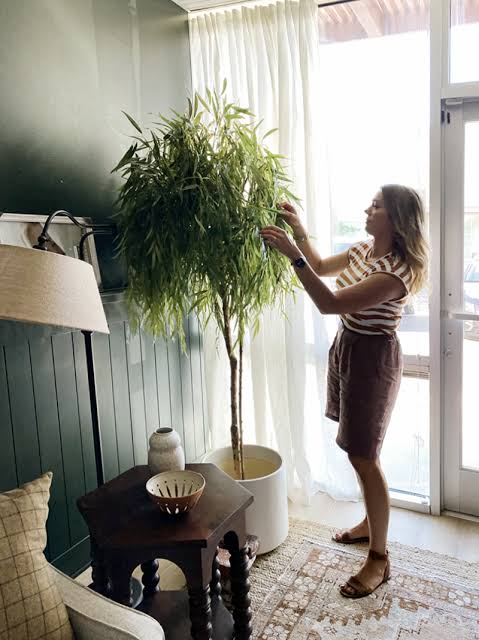
How to Make Artificial Trees Look More Realistic
Artificial trees are an easy way to bring greenery into your home or office without worrying about watering, pruning, or seasonal maintenance. However, even the highest-quality faux trees can look artificial if they aren’t styled properly. The good news is that a few simple techniques can make a dramatic difference.
Whether you’ve chosen a statement fiddle leaf fig, an elegant olive tree, or artificial trees to complement a built-in shelf or alcove, thoughtful placement and styling can help your décor look naturally lush. In this guide, we’ll share practical tips for making artificial trees look more realistic so they blend seamlessly into any space.
Choose a High-Quality Artificial Tree
The foundation of a realistic display starts with the tree itself. While budget-friendly options may seem appealing, premium artificial trees are typically designed with greater attention to detail.
Look for features such as:
- Realistic leaf shapes and natural color variations
- Textured trunks with authentic bark finishes
- Flexible branches for shaping
- Dense but balanced foliage
- High-quality materials that closely resemble real plants
A well-made artificial tree requires less styling and delivers a more convincing appearance from the start.
Fluff and Shape the Branches
Many artificial trees are compressed during shipping to protect them in transit. Straight out of the box, branches and leaves often appear flat or crowded.
Take time to:
- Separate every branch individually.
- Bend branches at different angles.
- Create uneven spacing rather than perfect symmetry.
- Spread leaves naturally throughout the canopy.
Real trees grow organically, not perfectly. Slight irregularities create a far more authentic look.
Rotate and Separate the Leaves
Leaves that all face the same direction immediately reveal an artificial tree.
Instead:
- Turn individual leaves in different directions.
- Mix upward- and downward-facing foliage.
- Separate clusters that appear too dense.
- Create small gaps that mimic natural growth.
This small adjustment adds depth and realism throughout the tree.
Place Your Tree Near Natural Light
Natural lighting makes artificial foliage appear more lifelike.
Position your tree:
- Near windows
- In bright living rooms
- Beside patio doors
- In sunlit offices
Avoid placing it directly in harsh sunlight for long periods if the manufacturer recommends indoor use only, as prolonged UV exposure may cause fading over time.
Upgrade the Planter
Many artificial trees come in simple plastic nursery pots designed to fit inside decorative containers rather than serve as the final display.
Upgrade the appearance by placing the tree inside:
- Ceramic planters
- Concrete pots
- Woven baskets
- Wood planters
- Modern metal containers
Choose a planter that complements your interior style while providing enough space for decorative filler materials.
Add Natural Pot Fillers
One of the easiest ways to hide an artificial tree’s plastic base is by covering it with natural-looking materials.
Popular options include:
- River rocks
- Decorative pebbles
- Moss
- Bark chips
- Coconut fiber
- Preserved moss
- Sand for coastal décor
These finishing touches make the entire arrangement appear professionally styled.
Mix Artificial Trees with Real Plants
Combining faux trees with live plants creates visual variety that helps disguise artificial elements.
Consider pairing your artificial tree with:
- Live pothos
- Snake plants
- ZZ plants
- Peace lilies
- Small succulents
The mix of real textures and living greenery enhances the overall authenticity of your space.
Clean Your Artificial Tree Regularly
Dust is one of the quickest ways to make an artificial tree look fake.
To keep it looking fresh:
- Dust leaves weekly with a microfiber cloth.
- Use a feather duster for larger trees.
- Blow away dust using compressed air or a hair dryer on a cool setting.
- Wipe stubborn dirt with a damp cloth.
Regular cleaning keeps leaves vibrant and realistic.
Avoid Overcrowding Your Space
Artificial trees should have enough room to showcase their natural shape.
Avoid:
- Pushing branches against walls
- Placing furniture directly into the foliage
- Cramming multiple large trees into one corner
Giving your tree adequate space allows it to become a natural focal point.
Style Around the Tree
The surrounding décor contributes to the realism of your artificial greenery.
Decorate nearby with:
- Floor lamps
- Woven baskets
- Area rugs
- Wooden furniture
- Neutral textiles
- Decorative books
- Natural stone accents
Creating a cohesive environment makes the tree feel like an intentional part of the room.
Trim or Adjust Problem Areas
Occasionally, a branch may look too stiff or leaves may bunch together unnaturally.
Don’t hesitate to:
- Bend wired branches slightly.
- Remove damaged leaves if needed.
- Redistribute foliage evenly.
- Rotate the tree periodically to find its best viewing angle.
Small adjustments can significantly improve its appearance.
Consider the Right Tree Size
A tree that’s too small or too large can look out of place.
As a general guideline:
- 4–5 feet works well for bedrooms and apartments.
- 6–7 feet suits living rooms and home offices.
- 8 feet or taller creates a statement in entryways or commercial spaces.
Choosing the right scale helps the tree blend naturally with your surroundings.
Refresh Your Décor Seasonally
Keep your artificial tree feeling fresh throughout the year by making small seasonal updates.
Ideas include:
- Decorative baskets in spring
- Coastal planters in summer
- Warm-toned accessories in autumn
- Soft lighting during the holidays
Changing the surrounding décor keeps the space interesting without replacing the tree.
Common Mistakes to Avoid
Avoid these common styling mistakes:
- Leaving branches folded after unboxing
- Using the original plastic nursery pot as the final display
- Ignoring dust buildup
- Choosing a tree that’s too small for the room
- Placing the tree in a dark corner without adequate lighting
- Styling branches too symmetrically
- Overcrowding the space with multiple large faux plants
Frequently Asked Questions
How do you make artificial trees look more realistic?
Shape the branches individually, rotate the leaves, place the tree in natural light, upgrade the planter, add natural moss or stones, and clean the foliage regularly.
Can people tell if an artificial tree is fake?
High-quality artificial trees that are properly styled are often difficult to distinguish from real plants, especially when viewed as part of a well-designed interior.
Should artificial trees be placed near windows?
Yes. Natural light enhances their appearance and creates realistic shadows, making them look more convincing. Just avoid prolonged direct sunlight if the tree isn’t UV protected.
What should I put on top of an artificial tree’s pot?
Decorative moss, pebbles, bark, river rocks, or preserved moss all help conceal the plastic base and create a finished, natural appearance.
Conclusion
Making artificial trees look more realistic doesn’t require major effort—it’s all about the details. By shaping the branches, choosing an attractive planter, adding natural fillers, keeping the foliage clean, and placing the tree in the right location, you can create a display that closely resembles the beauty of real greenery.
If you’re looking for premium faux trees designed with realistic foliage, lifelike trunks, and lasting quality, Fake Flowers offers a wide selection of artificial trees to suit homes, offices, and commercial spaces. With thoughtful styling and the right tree, you can enjoy beautiful greenery year-round without the maintenance of live plants.