
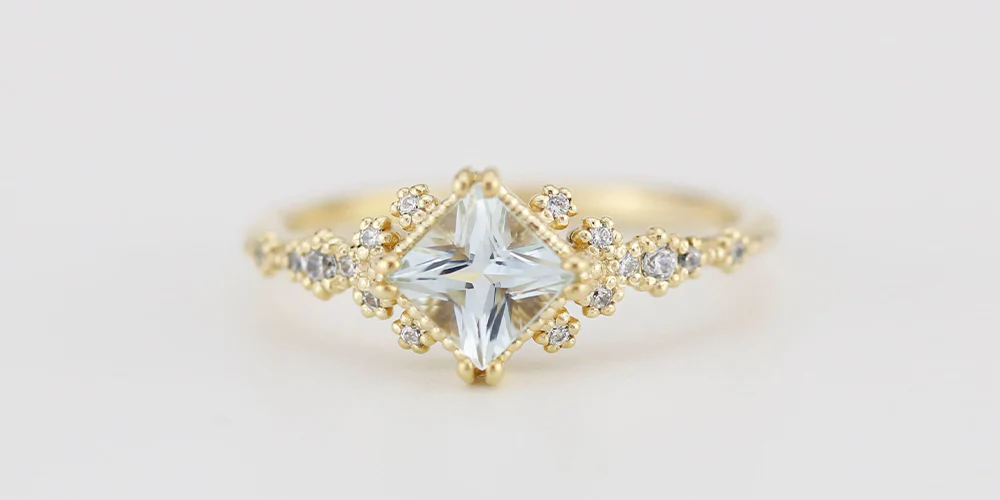
In the rapidly evolving landscape of 2026 bridal trends, a profound shift is occurring: modern couples are increasingly bypassing the mass-produced aesthetic of the contemporary jewelry mall in favor of pieces with a tangible history. This movement toward “meaningful luxury” has placed a renewed spotlight on the era of Jazz and Prohibition, where jewelry design underwent its most radical transformation. Among the most coveted treasures for today’s discerning shoppers are vintage art deco engagement rings, which represent a perfect marriage of architectural rigor and romantic sentiment. These rings do not merely sparkle; they serve as wearable artifacts of an optimistic age, defined by the bold geometric symmetry and innovative metalwork that characterized the 1920s and 1930s.
The Art Deco movement was a sharp departure from the flowery, organic motifs of the preceding Art Nouveau and Edwardian periods. Influenced by the rise of the skyscraper and the discovery of King Tutankhamun’s tomb, jewelers began to experiment with linear patterns, stepped “ziggurat” designs, and contrasting colors. This era saw the rise of platinum as the metal of choice, valued for its strength and ability to be worked into incredibly fine, lace-like filigree. When a modern bride chooses a Deco-era ring, she is choosing a level of hand-craftsmanship that is virtually impossible to replicate with modern 3D printing or casting techniques. Every milgrain bead and every hand-carved gallery reflects the individual spirit of an artisan who worked without the aid of modern computers.
Beyond the metalwork, the allure of Art Deco jewelry lies in the unique “personality” of the gemstones used. Before the standardization of the modern Round Brilliant cut, diamonds were hand-cut into Old European or Transitional shapes. These cuts feature larger facets and a higher crown, designed to dance under the warm glow of candlelight or early incandescent bulbs rather than the harsh fluorescent lighting of a modern laboratory. This results in a softer, more romantic “inner glow” that many collectors find far more captivating than the aggressive sparkle of modern stones. Furthermore, the use of “calibre-cut” accent stones—sapphires, emeralds, or onyx custom-cut to fit a specific geometric gap—adds a layer of colorful complexity that defines the high-jewelry standards of the era.
Sustainability and ethical sourcing have also become primary drivers for the luxury gift buyer in 2026. Choosing an antique or vintage ring is arguably the most eco-conscious way to celebrate an engagement. By selecting a piece that was crafted a century ago, consumers are participating in a circular economy that requires zero new mining and carries no contemporary environmental footprint. For many, the “something old” tradition has evolved into a powerful statement about conservation and the preservation of global heritage. There is a profound satisfaction in knowing that a ring has already been cherished for a lifetime and is now ready to witness the beginning of a new family legacy.
However, navigating the antique market requires more than just an eye for beauty; it requires an understanding of provenance. As the demand for vintage aesthetics grows, the market has seen an influx of “vintage-inspired” reproductions. While these may mimic the look of the 1920s, they often lack the density of the metal, the historical accuracy of the alloys, and the “soul” found in a genuine period piece. A true Art Deco ring will often feature hallmarks from legendary makers or specific metal purities that provide clues to its origin. Identifying these nuances is what separates a casual buyer from a true collector, making the educational aspect of the purchase just as rewarding as the acquisition itself.
Investing in an heirloom of this caliber is a commitment to quality over quantity. An Art Deco ring is designed to be timeless, transcending the “micro-trends” that dominate social media feeds. Its clean lines and balanced proportions ensure that it looks just as relevant with a modern wardrobe as it did during the height of the Roaring Twenties. Whether it is a classic diamond solitaire set in a geometric basket or a complex target ring featuring a halo of vibrant sapphires, these pieces represent an era where jewelry was treated as high art.
Ultimately, the journey to finding the perfect vintage ring is as much about the relationship with the jeweler as it is about the ring itself. In an era of digital transactions, working with a specialist who can provide the historical context and verify the integrity of the piece is paramount. For those who seek the highest standard of curation and a deep-seated passion for historical preservation, Gesner Estate Jewelry offers an unparalleled gateway to the past. By bridging the gap between historical artistry and modern expectations, they ensure that the elegance of the Art Deco era continues to bloom on the hands of a new generation of lovers.